
New Research: A comparative molecular study of rhizostome jellyfishes from Japan reveals variability in Symbiodiniaceae taxon associations and cassiosome production.
Led by Kei Chloe Tan , this study dives deep into the complex world of Rhizostomeae that play massive roles in Asian ecology and industry.
What makes these jellies unique?
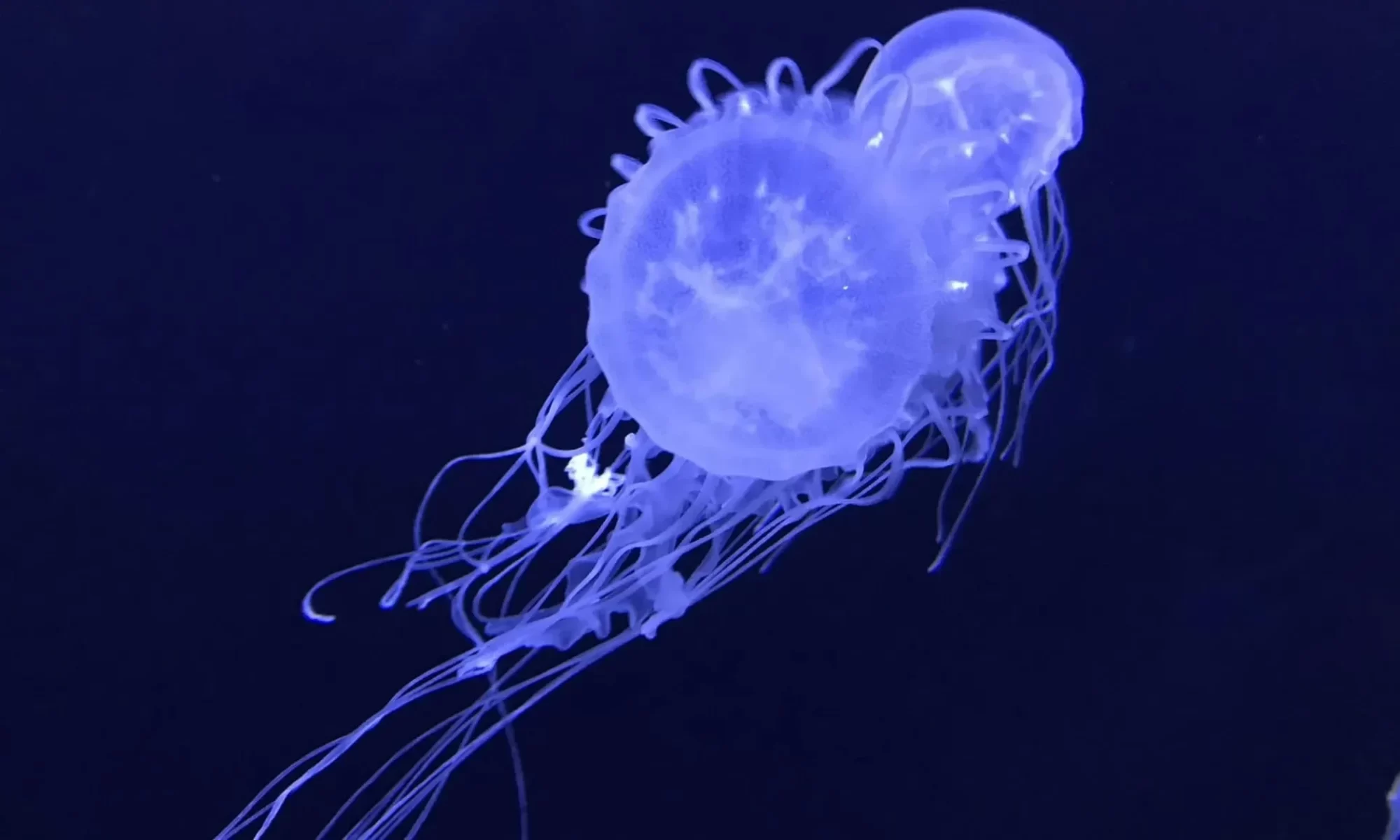
Rhizostome jellyfishes are unlike your average medusa. They don’t have long, trailing tentacles neither other structures at the eadg of theyr bell; they have eight highly branched oral arms, along which there are suctorial minimouth orifices.
Our study focused on three main goals:
- Identity: Using DNA barcoding to accurately identify species in Japanese waters.
- Partnership: Mapping which types of algae live inside which jellyfish.
- The Sting: Identifying which species produce cassiosomes—the “mucus grenades” responsible for the mysterious “stinging water” syndrome.
Key Discoveries
- A New Neighbor: We discovered that Cassiopea (Upside-down jellyfish) found in Kagoshima likely represents a new, undescribed species.
- Symbiotic Flexibility: We found that these jellyfishes are “plastic” in their partnerships, meaning the same species of jellyfish can host different types of algae (Symbiodinium, Cladocopium, or Durusdinium) depending on the individual.
- The “Grenade” Evolution: We confirmed that cassiosome production is a unique trait of the suborder Kolpophorae. Interestingly, we found that young jellies might not produce them until they reach a certain developmental stage.
“This research provides a baseline for understanding how jellyfish and algae co-evolve, helping us manage coastal ecosystems and the jellyfish fisheries that are so vital to the region.” — Chloe Tan, Lead Author
Lab Work in Action
This paper wasn’t just about sequences; it combined advanced molecular techniques with classic microscopy.
- Tandem DNA Amplification: Chloe developed a new method to simultaneously sequence the DNA of both the jellyfish host and its tiny algal residents.
- Microscopy: We captured high-resolution images of the cassiosomes—clusters of stinging cells (nematocysts) with algae at their core—proving exactly how these “contactless stings” work.
Read the Full Paper
Interested in the molecular data or the high-resolution phylogenetic trees? You can find the full study here:


Physalia mikazuki sp. nov. (Phylum Cnidaria; class Hydrozoa) blown into Japan’s northeast (Tohoku) at the whim of marine ecosystem change
A groundbreaking study co-authored by Cheryl Lewis Ames, Chanikarn Yongstar, Kei Chloe Tan, Ayane Totsu, and colleagues, has led to the identification of a new species of Portuguese Man-of-War (Physalia mikazuki sp. nov.) found in the waters of northeastern Japan (Tohoku).
The research, which also contou com Yoshiki Ochiai, Muhammad Izzat Nugraha, e Waka Sato-Okoshi, attributes the sudden presence of this new species in the temperate region to significant marine ecosystem changes. This discovery is vital for understanding how environmental shifts—such as changes in currents and climate—are forcing the global redistribution of marine organisms.
The findings emphasize the urgent need to monitor these shifts to protect marine biodiversity.
- Authors: Chanikarn Yongstar, Yoshiki Ochiai, Muhammad Izzat Nugraha, Kei Chloe Tan, Ayane Totsu, Waka Sato-Okoshi, Cheryl Lewis Ames
Find the original scientific paper here:

Dr. Ames’s research
As an experienced research scientist, teacher and mentor, Dr. Ames employs a combination of molecular and morphological tools to address major scientific questions in the fields of behavior, ecology, evolution and systematics. Her research focuses on venomous box jellyfish and seeks to further understanding of this cosmopolitan aquatic organism.
Cheryl has extensive field research experience having worked around the world including in the United States, Canada, Japan, and numerous tropical and subtropical regions. She has a demonstrated ability to collaborate with top-level government and academic researchers and obtain funding for multidisciplinary research projects. While designing experiments and conceiving ideas for publications, she strives to develop projects that strike an even balance between fundamental and applied marine biology.
A selected list of major research works appears below. For a full list of all of her work and more information about her research please visit her Research Gate profile.

Pathways to an integrated understanding of marine environments and ecosystems in the Asia-Pacific Region
The Asia-Pacific Region (APR) is a global hub of marine biodiversity, essential for global ecological stability and climate regulation. However, its ecosystems from extensive commercial fisheries to vital coral reefs face growing threats due to intense resource extraction and extreme climate events, such as marine heatwaves.
This Perspective article, led by an international collaboration (including Dr. Cheryl Ames), is the result of a seminar and workshop held at Tohoku University (Japan) in 2023. The goal was to address substantial barriers—including the vast diversity of cultures, languages, and management practices—that impede cross-national research efforts in the region.
The article concludes that these efforts are urgent and essential for supporting science-based policies and decisions, capable of confronting the escalating effects of climate change on the Pacific Asian marine systems.
“Without shared, high-quality data, our ability to detect patterns, predict outcomes, and guide effective action remains severely constrained.”
“A productive way forward is to build on regional initiatives that are already redefining how marine science is approached in the Asia-Pacific. This effort aligns with the goals of the World Premier International Research Centre Initiative-Advanced Institute for Marine Ecosystem Change (WPI-AIMEC), recently established at Tohoku University and Japan Agency for Marine-Earth Science and Technology (JAMSTEC), and a satellite campus at the University of Hawai’i, Manoa. WPI-AIMEC brings together researchers across disciplines to better understand and forecast marine ecosystem responses to environmental change, with a global scope but a particular focus on the Northwest Pacific.”

Find the Full Paper at Frontiers in Marine Science
Find more articles related to WPI-AIMEC

Raising Awareness of the Severity of “Contactless Stings” by Cassiopea Jellyfish and Kin
Current doctrine on jellyfish stings largely focuses on physical contact with a jellyfish. In rhizostome medusae capable of extruding agglomerations of nematocysts within mucus, physical contact is not necessary for skin irritation and pain. Here we highlight pain and symptoms reported by researchers and aquarists working with water around Cassiopea and several other jellyfish. We conclude that Cassiopea, long thought to be harmless, can lead to multi-day pain and rashes experienced largely as burning and itching sensations along entire limbs. We suggest that recommendations on sting avoidance expand to include consideration of these contactless stings so as to limit a previously under-publicized vector of envenomation.

The role of taxonomic expertise in interpretation of metabarcoding studies
The performance of DNA metabarcoding approaches for characterizing biodiversity can be influenced by multiple factors. Here, we used morphological assessment of taxa in zooplankton samples to develop a large barcode database and to assess the congruence of taxonomic identification with metabarcoding under different conditions. We analysed taxonomic assignment of metabarcoded samples using two genetic markers (COI, 18S V1–2), two types of clustering into molecular operational taxonomic units (OTUs, ZOTUs), and three methods for taxonomic assignment (RDP Classifier, BLASTn to GenBank, BLASTn to a local barcode database). The local database includes 1042 COI and 1108 18S (SSU) barcode sequences, and we added new high-quality sequences to GenBank for both markers, including 109 contributions at the species level. The number of phyla detected and the number of taxa identified to phylum varied between a genetic marker and among the three methods used for taxonomic assignments. Blasting the metabarcodes to the local database generated multiple unique contributions to identify OTUs and ZOTUs. We argue that a multi-marker approach combined with taxonomic expertise to develop a curated, vouchered, local barcode database increases taxon detection with metabarcoding, and its potential as a tool for zooplankton biodiversity surveys.
Cassiopea upside-down jellyfish in Key Largo mangrove forest waters (Florida Keys, USA)
Video showing footage of Cassiopea upside-down jellyfish in Key Largo mangrove forest waters (Florida Keys, USA). Water samples were taken from this collection site during a jellyfish environmental DNA (eDNA) metabarcoding study by Ames et al. 2021, published in Frontiers of Marine Science. Copyright A.C. Morandini (coauthor on the study) “Fieldable Environmental DNA Sequencing to Assess Jellyfish Biodiversity in Nearshore Waters of the Florida Keys, United States”

Fieldable Environmental DNA Sequencing to Assess Jellyfish Biodiversity in Nearshore Waters of the Florida Keys, United States
Recent advances in molecular sequencing technology and the increased availability of fieldable laboratory equipment have provided researchers with the opportunity to conduct real-time or near real-time gene-based biodiversity assessments of aquatic ecosystems. In this study, we developed a workflow and portable kit for fieldable environmental DNA sequencing (FeDS) and tested its efficacy by characterizing the breadth of jellyfish (Medusozoa) taxa in the coastal waters of the Upper and Lower Florida Keys. Environmental DNA was isolated from seawater collection events at eight sites and samples were subjected to medusozoan 16S rRNA gene and metazoan mitochondrial cytochrome oxidase 1 gene profiling via metabarcoding onsite. In total, FeDS yielded 175,326 processed sequence reads providing evidence for 53 medusozoan taxa. Our most salient findings revealed eDNA from: (1) two venomous box jellyfish (Cubozoa) species, including taxa whose stings cause the notorious Irukandji envenomation syndrome; (2) two species of potentially introduced stalked jellyfish (Staurozoa); and (3) a likely cryptic species of upside-down jellyfish (Scyphozoa). Taken together, the results of this study highlight the merits of FeDS in conducting biodiversity surveys of endemic and introduced species, and as a potential tool for assessing envenomation and/or conservation-related threats.

Cassiosomes are stinging-cell structures in the mucus of the upside-down jellyfish Cassiopea xamachana
Snorkelers in mangrove forest waters inhabited by the upside-down jellyfish Cassiopea xamachana report discomfort due to a sensation known as stinging water, the cause of which is unknown. Using a combination of histology, microscopy, microfluidics, videography, molecular biology, and mass spectrometry-based proteomics, we describe C. xamachana stinging-cell structures that we term cassiosomes. These structures are released within C. xamachana mucus and are capable of killing prey. Cassiosomes consist of an outer epithelial layer mainly composed of nematocytes surrounding a core filled by endosymbiotic dinoflagellates hosted within amoebocytes and presumptive mesoglea. Furthermore, we report cassiosome structures in four additional jellyfish species in the same taxonomic group as C. xamachana (Class Scyphozoa; Order Rhizostomeae), categorized as either motile (ciliated) or nonmotile types. This inaugural study provides a qualitative assessment of the stinging contents of C. xamachana mucus and implicates mucus containing cassiosomes and free intact nematocytes as the cause of stinging water. The discovery of cassiosomes is detailed in this paper
Click here to access the full article.
Click here to see the media impact of the discovery of cassiosomes
Box jellyfish Alatina alata planulae
Box jellyfish Alatina alata planulae in CIEE Research Station Bonaire, The Netherlands. Apr 23 2013. Collected by Cheryl Lewis Ames, Arjen van Dorsten, and van Blerk family. Modified from original video by Cheryl Lewis Ames.
Box jellyfish Alatina alata Spawning
Box jellyfish Alatina alata spawning in aquarium at CIEE Research Station Bonaire, The Netherlands. Apr 23 2014. Collected by Cheryl Lewis Ames, Arjen van Dorsten, and van Blerk family. Modified from original video by Cheryl Lewis Ames.
Jellyfish Expert: Biodiversity & Genomics