Behind every breakthrough and exciting discovery at the International Marine Science Lab is a dedicated, international team. We’re excited to introduce our new “Meet the Lab” page, giving you a closer look at the diverse talents, backgrounds, and personalities that make our research community so vibrant.
Learn about their expertise, their roles, and what makes our lab a place of great work and cutting-edge research.
Get to know our incredible team: You can access the page directly via the link below, or through the new “Meet the Lab” icon in our website menu!
Tohoku University stands at the forefront of tackling some of the most pressing global challenges, particularly those related to our planet’s changing marine ecosystems. The Tohoku University Integrated Report 2024 highlights groundbreaking research and initiatives that aim to understand and mitigate the impacts of environmental shifts on ocean life and beyond.
Unraveling Marine Ecosystems with Environmental DNA
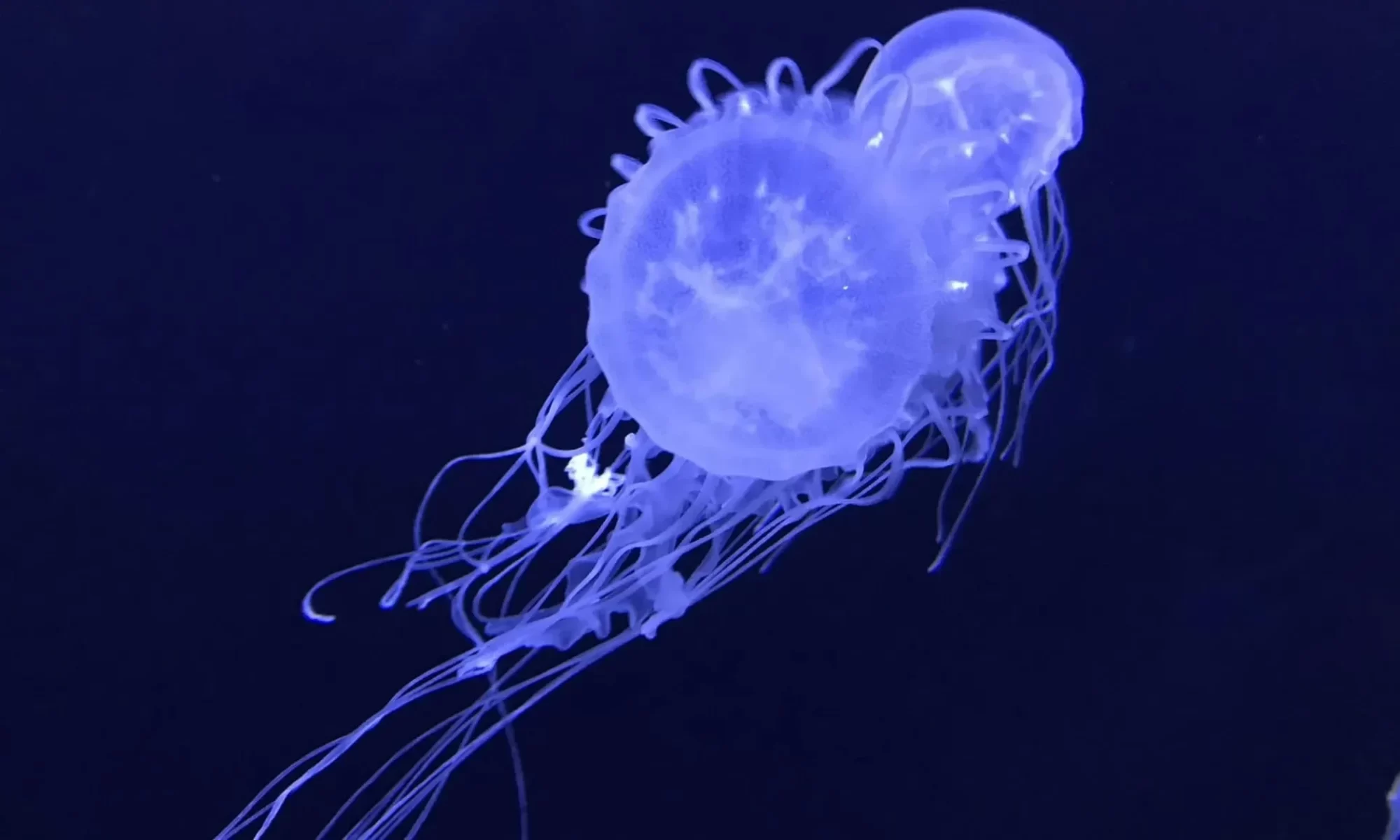
At the heart of marine research is Professor Cheryl Ames, Unit Leader/Principal Investigator at the Advanced Institute for Marine Ecosystem Change (WPI-AIMEC) and Professor at the Graduate School of Agricultural Science. Professor Ames’s research, which notably began with her fascination for jellyfish, has evolved into broader marine organismal studies utilizing environmental DNA (eDNA) analysis.
eDNA, collected from the environment (like seawater), provides a snapshot of all organisms inhabiting an ecosystem at a specific time, even revealing the environmental burden imposed by human activities. Professor Ames has developed a compact, portable eDNA detection kit, significantly reducing the time and cost associated with estimating jellyfish distribution over wide areas. This versatile kit can also be adapted to extract biological data from various other marine organisms.
Collaborations are key to this research. Professor Ames’s unit works with octopus fishers and wholesale auction centers in Minamisanriku, Miyagi, collecting eDNA to aid resource management in Shizugawa Bay and contribute to food sustainability. Further efforts are underway in Okinawa to develop rapid eDNA tests, crucial for regions where jellyfish damage impacts human health and tourism
Addressing Earth’s Changes and Shaping Ocean Life
WPI-AIMEC was established with a strong sense of urgency to decipher the mechanisms behind ocean warming and connect this understanding to projection models. The institute acknowledges the increasing vulnerability of marine ecosystems to rapid changes, suchando as rising global ocean temperatures and fluctuating ocean currents. Incidents like the mass outbreak of venomous Portuguese man-of-war in Miyagi Prefecture underscore the unprecedented phenomena occurring in our oceans.
Understanding the ocean requires an integrated approach, encompassing physics, chemistry, biology, and ecosystems, rather than isolated disciplinary studies. Tohoku University facilitates multidisciplinary research, bringing together diverse specializations to explore connections between sub-disciplines and gain a better understanding of the overall mechanisms of the ocean environment. The ultimate goal is to understand the relationship between the ocean and ecosystems, providing options for actions to build a sustainable society capable of adapting to environmental and ecological changes.
WPI-AIMEC aims to leverage AI to integrate various data types, enhancing our understanding of marine environments and the interactions between marine ecosystems and human society. The establishment of a centralized repository for valuable marine samples and their metadata (including eDNA sequences and images) is also a key initiative to invigorate marine ecology research. Outreach efforts include workshops for researchers and engaging elementary school students in eDNA sample collection to foster ocean conservation.
Tohoku University’s commitment to pioneering research in marine science, exemplified by Professor Ames’s work and the WPI-AIMEC initiative, is vital for a sustainable future.
Earlier this month, Dr. Cheryl Ames participated in a highly productive and collaborative meeting in Nice, France, from June 6-8, 2025. This important gathering provided a crucial platform for engaging with international colleagues and advancing the strategic planning for the groundbreaking Ocean Shot Research Grant.
As a Unit Leader at WPI-AIMEC and a co-leader of the selected Ocean Shot project, Dr. Ames was a key figure in the discussions. The project, officially titled “Discovery in the largest frontier: advanced imaging and genomics of open ocean animals,” recently secured $2.75 million USD for a three-year research period, set to begin in 2025. This significant funding was awarded by the Sasakawa Peace Foundation’s Ocean Policy Research Institute under its Ocean Shot Research Grant program.
“This is an exciting opportunity to bring marine science researchers together from around the globe to explore the ocean using innovative genomics and imaging approaches. I look forward to seeing all the new species we will discover!”
— Dr. Cheryl Ames
For comprehensive details on the Ocean Shot Research Grant, its team, and scientific objectives, please visit the original announcement on the WPI-AIMEC news page: https://wpi-aimec.jp/en/news/2207/]
In February 2025, the proposal entitled “Discoveries at the Greatest Frontiers: Advanced Imaging and Genomics of Pelagic Animals,” submitted by WPI-AIMEC Unit Leader Prof. Cheryl Ames (Graduate School of Agricultural Science, Tohoku University) with Ocean Shot team leader Jan Hemmi University of Western Australia, together with Karen Osborn of the University of Western Australia and Smithsonian National Museum of Natural History, and Kakani Katija of Monterey Bay Aquarium Research Institute, was selected for the Ocean Shot research grant program by the Sasakawa Peace Foundation’s Ocean Policy Research Institute.
Ocean Shot was established to provide large-scale support for the discovery of marine species and the development of new technologies that drive these discoveries. Through this selection, the team will receive 2.75 million USD for their proposed 3-year research project starting in 2025.
This research project focuses on the midwater zone, located between the ocean surface and the deep sea. Despite being estimated to harbor over 90% of Earth’s biodiversity, this light-limited region is one of the least explored ecosystems due to its inaccessibility. By employing imaging, genomics, eDNA, and AI technologies in dedicated research cruises, the project aims to develop a comprehensive database of marine organisms. Through collecting, curating, compiling and disseminating multiple data types, the project aspires to bring to light the scale of midwater biodiversity, evolutionary processes, and environmental changes on a global scale.
The national university in the northeastern Japan prefecture of Miyagi is set to be formally selected as early as fiscal 2024 as a recipient of annual financial support for up to 25 years from fiscal 2024, starting with around 10 billion yen ($69 million) in the initial year.
Under the new Universities for International Research Excellence program, the grants will be paid out of profits generated from a 10 trillion yen fund.
Tohoku University has been rated highly for its large number of research paper citations, and measures to strengthen its research capabilities and reform its management, the ministry said.
Our team at Tohoku University, led by Associate Professor Alyne Delaney, just launched SEAQUEST – a vital research project tackling the complex challenges facing fisheries in Japan’s Tohoku region since the 2011 earthquake.
We’re blending cutting-edge science, like eDNA and AI for species distribution modeling, with traditional socio-ecological concepts like satoumi and umigyo. This holistic approach helps us understand why some fisheries have declined while others increased, especially with changing ocean conditions and parasitic outbreaks.
SEAQUEST emphasizes community-based citizen science, collecting crucial data from simple water samples. We’re working closely with diverse local and international stakeholders, including fishing communities (even women fishers!), tourism, and industry partners.
Our goal? To combine local ecological knowledge with scientific methods to foster true social and environmental sustainability. Co-Principal Investigators Professor Cheryl Ames and Associate Professor Toyonobu Fujii are key to this interdisciplinary effort.
With octopus, squid, and cuttlefish catches soaring but misidentification and inaccurate reporting raising overfishing fears, our international, multidisciplinary team is stepping in. Led by Tohoku University’s own Cheryl Ames (Co-Principal Investigator and Smithsonian Research Collaborator) and Demian Willette from Loyola Marymount University, our 15-member team spans 7 countries and diverse fields, including fisheries management, marine biology, and AI. Associate Professor Alyne Delaney (Tohoku University) is also on board!
Funded by the National Science Foundation, we’re building an application to track and identify octopus from ocean to table. This project uniquely combines traditional methods with cutting-edge tech: genomics, molecular metabarcoding, eDNA, and AI. Fishers in Mexico, California, and Alaska will be key citizen scientists, using eDNA kits to help us map octopus distribution and seasonality.
“Reliable knowledge will point us to where edible octopuses are found, and policymakers can use this information to make octopus fishing sustainable,” says Ames. We’re confident this network will pave the way for ecosystem-based fisheries and contribute to a thriving blue economy.
Current doctrine on jellyfish stings largely focuses on physical contact with a jellyfish. In rhizostome medusae capable of extruding agglomerations of nematocysts within mucus, physical contact is not necessary for skin irritation and pain. Here we highlight pain and symptoms reported by researchers and aquarists working with water around Cassiopea and several other jellyfish. We conclude that Cassiopea, long thought to be harmless, can lead to multi-day pain and rashes experienced largely as burning and itching sensations along entire limbs. We suggest that recommendations on sting avoidance expand to include consideration of these contactless stings so as to limit a previously under-publicized vector of envenomation.