From Brasil to Japan

Cheryl Ames presented the ship to the Japanese public.

It was an online tour during which Professor Ames presented the living areas and kitchen, commenting on everything from food options to the work schedule. Then, she showed the lab where her teammates and other international scientists were performing extractions on previously collected samples.

The tour was especially interesting because it showcased the entire ROV support and command structure while the ROV was active at a depth of over 500m. This made it possible to see the “behind-the-scenes” of the live ROV dive happening simultaneously on YouTube.

The tour helped convey the scale of the endeavor and the massive infrastructure required to collect data from the mid-water—from the initial dives to the final extractions.

Stay tuned for more mission updates

Meet our lab team aboard Falkor (too)

Falkor (too) has sailed! On board is a diverse group of scientists and specialists composing the cruise crew, working in a collaborative effort to explore the midwater column along the Brazilian coast.

The Schmidt Ocean Institute organized a profile of the current research crew for the “Designing the Future 3” cruise, which includes members of our lab.

Lab members on board:

If you are interested in learning more about the current cruise, find more information on the “Designing the Future 3” page at the Schmidt Ocean Institute website: https://schmidtocean.org/cruise/designing-the-future-3/

OceanShot: The Cruise – the Lab Team Embarks on the RV Falkor (too)

We’re officially off!

The Lab team — Prof. Cheryl Ames, Chanikarn Yongstar (Nune) and Kei CHloe Tan — is already on board in Salvador, Brazil, prepping for the ambitious OceanShot cruise aboard the RV Falkor (too). While the team is currently settling in and getting the gear ready, the ship is set to depart on 15/04, navigating the coastline toward Fortaleza until May 1st. Throughout the journey, the team will be focusing their research on the mid-water column, utilizing a diverse range of scientific methods to analyze this deep-sea “twilight zone.” The best part? You can join the expedition from home! We invite you to follow the journey and watch live ROV dives through the ship’s website at schmidtocean.org/technology/live-from-rv-falkor/.

Stay tuned for more updates from the Atlantic very soon!

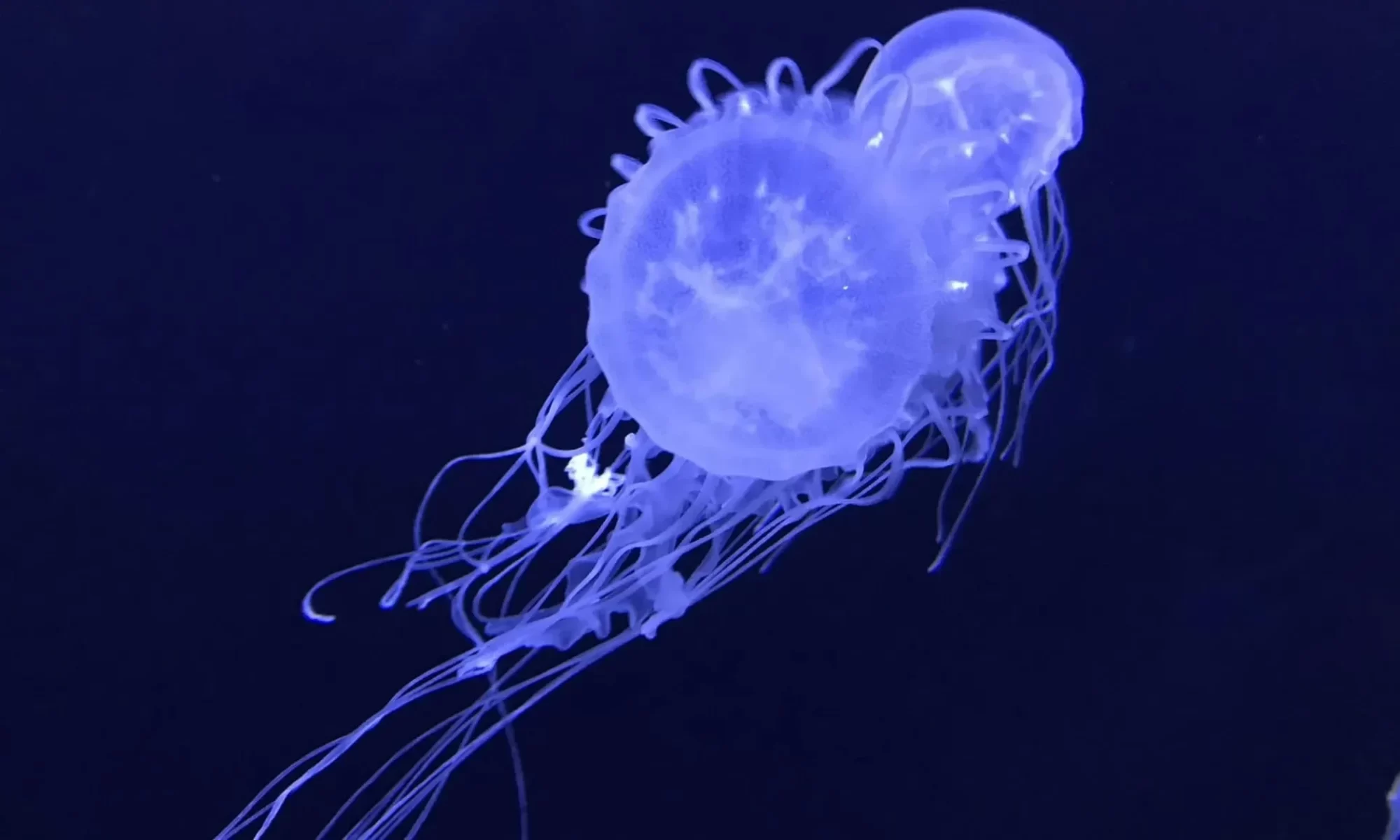
New Research: A comparative molecular study of rhizostome jellyfishes from Japan reveals variability in Symbiodiniaceae taxon associations and cassiosome production.

Led by Kei Chloe Tan , this study dives deep into the complex world of Rhizostomeae that play massive roles in Asian ecology and industry.

What makes these jellies unique?

Rhizostome jellyfishes are unlike your average medusa. They don’t have long, trailing tentacles neither other structures at the eadg of theyr bell; they have eight highly branched oral arms, along which there are suctorial minimouth orifices.

Our study focused on three main goals:

  • Identity: Using DNA barcoding to accurately identify species in Japanese waters.
  • Partnership: Mapping which types of algae live inside which jellyfish.
  • The Sting: Identifying which species produce cassiosomes—the “mucus grenades” responsible for the mysterious “stinging water” syndrome.

Key Discoveries

  • A New Neighbor: We discovered that Cassiopea (Upside-down jellyfish) found in Kagoshima likely represents a new, undescribed species.
  • Symbiotic Flexibility: We found that these jellyfishes are “plastic” in their partnerships, meaning the same species of jellyfish can host different types of algae (Symbiodinium, Cladocopium, or Durusdinium) depending on the individual.
  • The “Grenade” Evolution: We confirmed that cassiosome production is a unique trait of the suborder Kolpophorae. Interestingly, we found that young jellies might not produce them until they reach a certain developmental stage.

“This research provides a baseline for understanding how jellyfish and algae co-evolve, helping us manage coastal ecosystems and the jellyfish fisheries that are so vital to the region.”Chloe Tan, Lead Author

Lab Work in Action

This paper wasn’t just about sequences; it combined advanced molecular techniques with classic microscopy.

  • Tandem DNA Amplification: Chloe developed a new method to simultaneously sequence the DNA of both the jellyfish host and its tiny algal residents.
  • Microscopy: We captured high-resolution images of the cassiosomes—clusters of stinging cells (nematocysts) with algae at their core—proving exactly how these “contactless stings” work.

Read the Full Paper

Interested in the molecular data or the high-resolution phylogenetic trees? You can find the full study here:

カツオノエボシは1種ではなかった:5種への再分類と新種「ミカヅキノエボシ」の命名 執筆:彩恵 りり

サイエンスライターの彩恵りり氏が、カツオノエボシ属(Physalia属)が5種に再分類された最新の研究について詳しく解説してくださいました。これら新種のうち1種の発見に当研究室が貢献したことを、大変光栄に思います。

[彩恵りり氏による解説記事はこちら]

[当研究室のオリジナル論文はこちら]

Nikkei reported on Mikazuki no Eboshi: 宮城県で新種のクラゲ、伊達政宗にちなんで命名 東北大学

Our lab’s discovery was featured in a Nikkei article. The piece focused on the computer simulation used to estimate the period and travel path of the specimen, as it originated from a different region than the discovery site:

コンピューターを使ったシミュレーション(模擬実験)の結果、神奈川県沖の相模湾などから海流に乗って運ばれた可能性があると分かった。研究成果をまとめた論文は学術誌「フロンティアズ・オブ・マリン・サイエンス」に掲載された。

Find the original material at:

Find the original scientific paper here:

New jellyfish species “Mikazuki no Eboshi” first confirmed in Tohoku

tank

By: 官庁通信デジタル _ KANCHO TSUSHIN DIGITAL

A group led by Professor Cheryl Ames of Tohoku University has discovered a new species of jellyfish, the “Mikazuki no Eboshi” This is the first time that a highly venomous species of jellyfish, a relative of the Portuguese man-of-war, has been found in Tohoku. They analyze that one of the reasons for its discovery is the abnormal fluctuations in ocean conditions in recent years.

The Portuguese man-of-war lives in tropical and temperate climates. In Japan, it is found from Okinawa to Sagami Bay, but has not been officially confirmed along Japan’s northern coast until now. The crescent-shaped crest of the helmet worn by Date Masamune, a military commander active in the Tohoku region, is the origin of the name.

The Mikazuki fish was collected after being washed up on Gamo Beach in Sendai City, Miyagi Prefecture. It is speculated that the northward movement of the Kuroshio Current carried this species, which lives in southern Japan, to Tohoku. Ocean current simulations suggest that it takes about 30 days for the fish to travel from Sagami Bay to Sendai Bay, and 45 days to reach the coast of Aomori.

The group commented that “this study provides important insights into understanding the movement and dispersal of marine organisms due to climate change,” and added, “Changes in the appearance and distribution of jellyfish have the potential to affect not only ecosystems but also people’s lives and safety, so we need to carefully monitor their trends.”

Find the original material at: 官庁通信デジタル

Find the original scientific paper here

NHK – Coverage – Tohoku University research group names new species after Date Masamune

NHK broadcast the findings of our laboratory. We are exceptionally proud of our team’s achievement and delighted by the public interest generated by our research.

The broadcast provided a concise overview of the discovery and the underlying shift in marine currents that led the specimens to be washed ashore in Sendai Bay.

As Professor Ames stated:

“The discovery of this new species was incredibly exciting and a fortunate find, but it also serves as an indicator that the species is migrating north due to climate change.”

You can access the full NHK coverage and video on their website by clicking the icon below:

And you can find the complete scientific paper here: