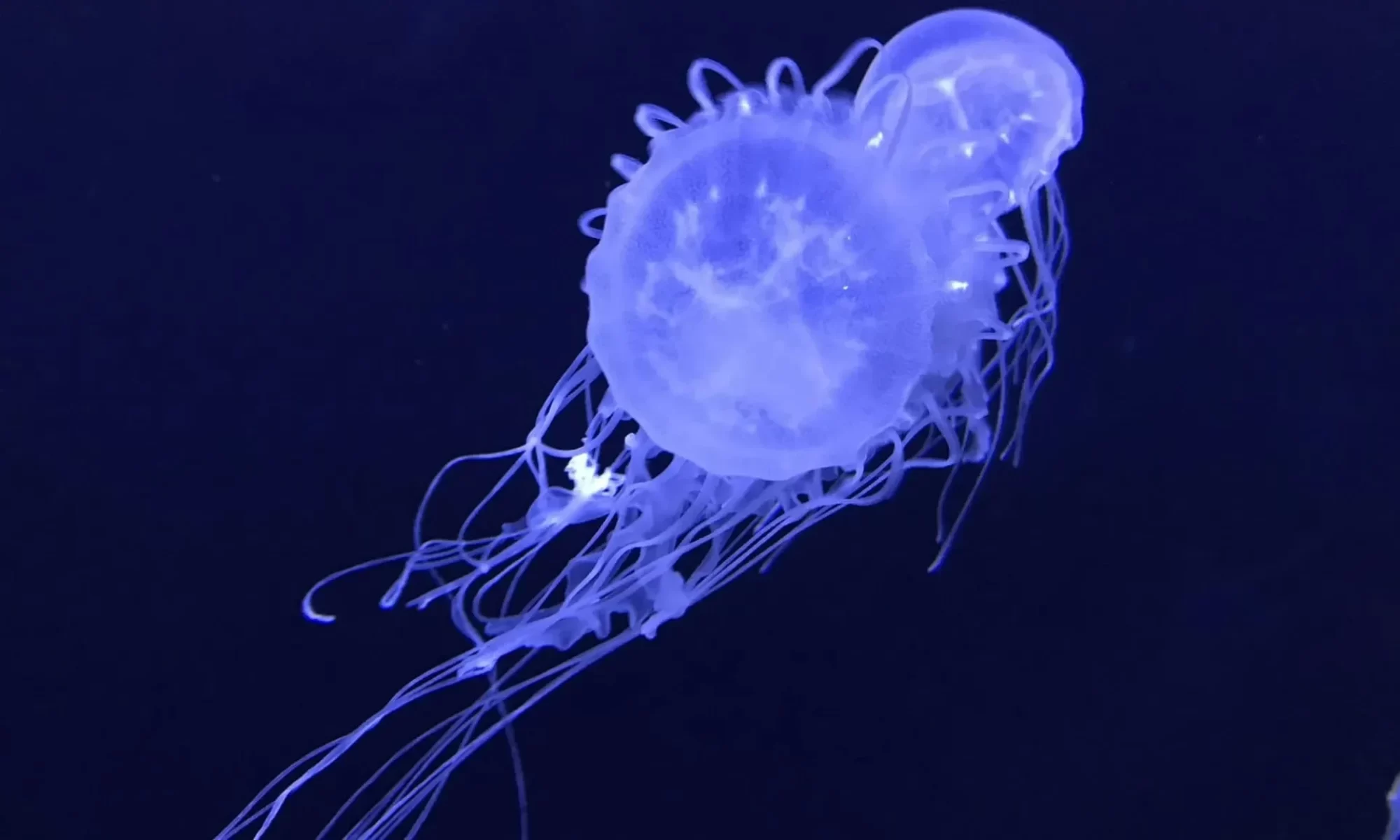
Live Jellyfish Make a Splash in Marine Education

The Smithsonian Magazine that takes you behind the scenes at the National Museum of Natural History! The piece shines a spotlight on the museum’s unique “AquaRoom” a dedicated facility where live jellyfish and other marine invertebrates are raised and studied.

The AquaRoom, co-founded by marine biologists Allen Collins and Dr. Cheryl Ames, had humble beginnings but a grand vision. As Allen Collins recounts,

“So, Cheryl and I started collecting freebie aquarium stuff that people were getting rid of in the department, including a 55-gallon tank.”

From these dedicated efforts, the facility grew to cultivate various jellyfish species and became instrumental in educational outreach, offering tours, bringing live jellyfish to the museum floor, and continuing its mission through virtual webinars and collaborations, even sending jellyfish polyps for student experiments.

Dive into the full story about this incredible educational program and the dedicated team behind it. Read the article on Smithsonian Magazine:

Who’s in this Ocean? Tracking Down Species on the Go Using Environmental DNA

The article details the development of a novel method for tracking marine species: the portable eDNA sequencing kit (FeDS), spearheaded by Dr. Cheryl Lewis Ames’s team from Tohoku University. The article explains how the FeDS kit makes the complex process of environmental DNA identification — from water sample collection to species identification — entirely portable and capable of being conducted on-site without an internet connection, thanks to the Nanopore MinION device.

The effectiveness of the FeDS kit was successfully tested in the Florida Keys, where the team not only detected the upside-down jellyfish (Cassiopea) but also identified a remarkable 53 jellyfish species, including two venomous box jellyfish species previously unreported in the area. Dr. Ames envisions incredible practical applications for this technology, such as predicting jellyfish sting risks, much like a ‘weather forecast app’ for swimmers!

This innovative research was published in the esteemed Frontiers in Marine Science journal, underscoring its solid impact and global relevance.

To understand this groundbreaking innovation and how it’s shaping the future of marine life detection, read the full article on Asia Research News:

And to access the original scientific paper that underpins this research, click here:

The role of taxonomic expertise in interpretation of metabarcoding studies

The performance of DNA metabarcoding approaches for characterizing biodiversity can be influenced by multiple factors. Here, we used morphological assessment of taxa in zooplankton samples to develop a large barcode database and to assess the congruence of taxonomic identification with metabarcoding under different conditions. We analysed taxonomic assignment of metabarcoded samples using two genetic markers (COI, 18S V1–2), two types of clustering into molecular operational taxonomic units (OTUs, ZOTUs), and three methods for taxonomic assignment (RDP Classifier, BLASTn to GenBank, BLASTn to a local barcode database). The local database includes 1042 COI and 1108 18S (SSU) barcode sequences, and we added new high-quality sequences to GenBank for both markers, including 109 contributions at the species level. The number of phyla detected and the number of taxa identified to phylum varied between a genetic marker and among the three methods used for taxonomic assignments. Blasting the metabarcodes to the local database generated multiple unique contributions to identify OTUs and ZOTUs. We argue that a multi-marker approach combined with taxonomic expertise to develop a curated, vouchered, local barcode database increases taxon detection with metabarcoding, and its potential as a tool for zooplankton biodiversity surveys.

Click here to access the full article.

Cassiopea upside-down jellyfish in Key Largo mangrove forest waters (Florida Keys, USA)

Video showing footage of Cassiopea upside-down jellyfish in Key Largo mangrove forest waters (Florida Keys, USA). Water samples were taken from this collection site during a jellyfish environmental DNA (eDNA) metabarcoding study by Ames et al. 2021, published in Frontiers of Marine Science. Copyright A.C. Morandini (coauthor on the study) “Fieldable Environmental DNA Sequencing to Assess Jellyfish Biodiversity in Nearshore Waters of the Florida Keys, United States”

Tracking Down Ocean Species On the Go Using eDNA

An image of the Smithsonian Museum logo

The article highlights the pioneering work of our own Dr. Cheryl Ames and her team in the Florida Keys. They led a crucial study demonstrating the potential of a portable Nanopore sequencer to detect the presence of upside-down jellyfish (Cassiopea xamachana) and other jellyfish species directly in the field! This represents an incredible leap forward, overcoming the challenges of bringing complex DNA analysis from labs into the marine environment.

This technology not only identified Cassiopea jellyfish but also revealed the presence of other species unseen at the time of sampling, such as moon jellyfish and venomous box jellyfish. The potential is vast: from predicting jellyfish sting risks to aiding fisheries management, supporting conservation efforts, and even integrating into autonomous underwater vehicles for comprehensive marine surveys.

This groundbreaking research stems from a foundational scientific paper published in Frontiers in Marine Science, underscoring its impact.

Read the full article on Smithsonian Ocean and dive into the future of species detection:

And for the original scientific paper that underpins this amazing work, access it here:

Fieldable Environmental DNA Sequencing to Assess Jellyfish Biodiversity in Nearshore Waters of the Florida Keys, United States

Recent advances in molecular sequencing technology and the increased availability of fieldable laboratory equipment have provided researchers with the opportunity to conduct real-time or near real-time gene-based biodiversity assessments of aquatic ecosystems. In this study, we developed a workflow and portable kit for fieldable environmental DNA sequencing (FeDS) and tested its efficacy by characterizing the breadth of jellyfish (Medusozoa) taxa in the coastal waters of the Upper and Lower Florida Keys. Environmental DNA was isolated from seawater collection events at eight sites and samples were subjected to medusozoan 16S rRNA gene and metazoan mitochondrial cytochrome oxidase 1 gene profiling via metabarcoding onsite. In total, FeDS yielded 175,326 processed sequence reads providing evidence for 53 medusozoan taxa. Our most salient findings revealed eDNA from: (1) two venomous box jellyfish (Cubozoa) species, including taxa whose stings cause the notorious Irukandji envenomation syndrome; (2) two species of potentially introduced stalked jellyfish (Staurozoa); and (3) a likely cryptic species of upside-down jellyfish (Scyphozoa). Taken together, the results of this study highlight the merits of FeDS in conducting biodiversity surveys of endemic and introduced species, and as a potential tool for assessing envenomation and/or conservation-related threats.

Click here to access the full article