サイエンスライターの彩恵りり氏が、カツオノエボシ属(Physalia属)が5種に再分類された最新の研究について詳しく解説してくださいました。これら新種のうち1種の発見に当研究室が貢献したことを、大変光栄に思います。


Jellyfish Expert: Biodiversity & Genomics

サイエンスライターの彩恵りり氏が、カツオノエボシ属(Physalia属)が5種に再分類された最新の研究について詳しく解説してくださいました。これら新種のうち1種の発見に当研究室が貢献したことを、大変光栄に思います。

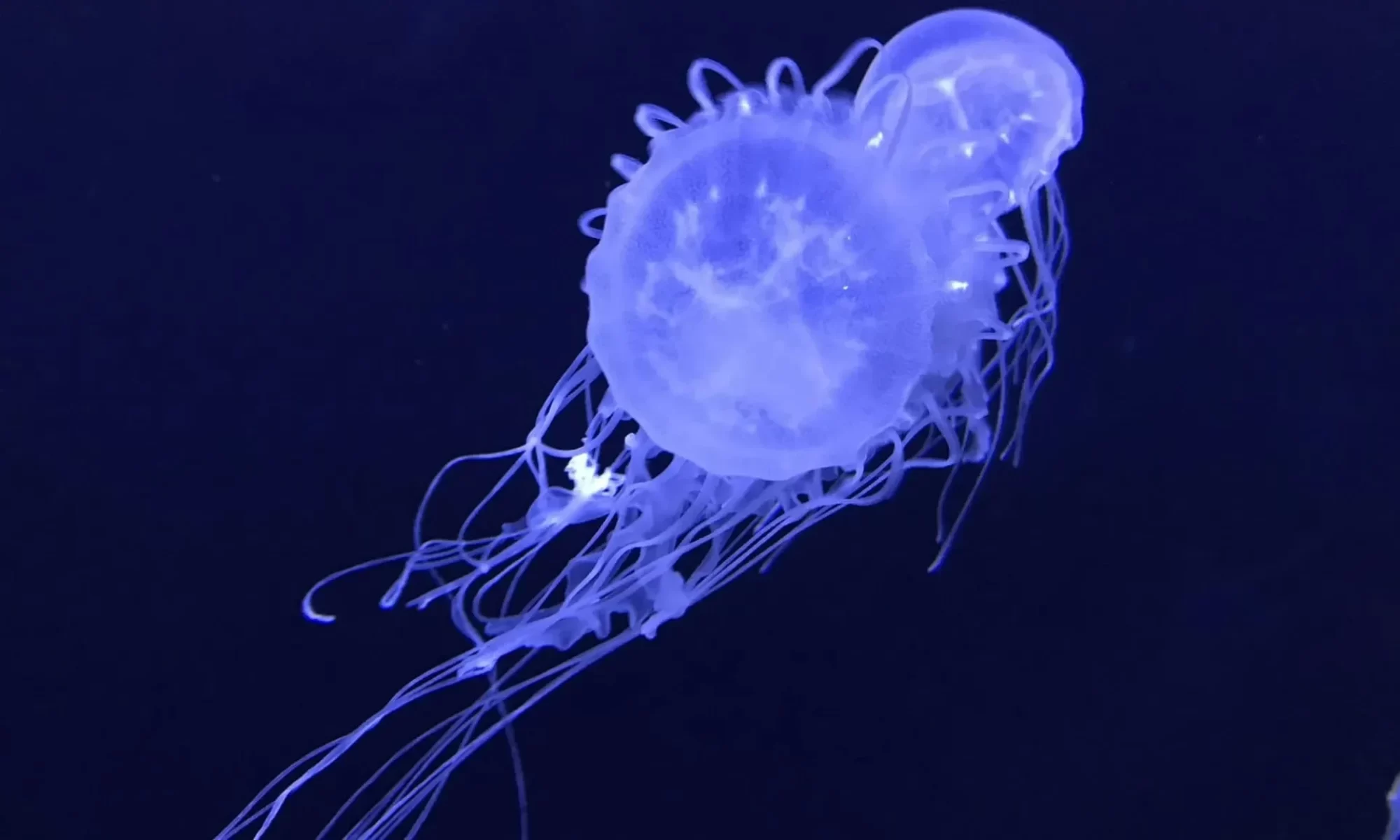
Alongside 13 other new species is our lab’s discovery, the Mikazuki no Eboshi (Physalia mikazuki).
These other new species are also incredibly interesting discoveries, spanning a wide range of habitats and phyla. Each has truly unique characteristics and is well worth a look.
Find the original material at:

Find the original scientific paper of our discovery here:

Our lab’s discovery was featured in a Nikkei article. The piece focused on the computer simulation used to estimate the period and travel path of the specimen, as it originated from a different region than the discovery site:
コンピューターを使ったシミュレーション(模擬実験)の結果、神奈川県沖の相模湾などから海流に乗って運ばれた可能性があると分かった。研究成果をまとめた論文は学術誌「フロンティアズ・オブ・マリン・サイエンス」に掲載された。
Find the original material at:

Find the original scientific paper here:

By: 官庁通信デジタル _ KANCHO TSUSHIN DIGITAL
A group led by Professor Cheryl Ames of Tohoku University has discovered a new species of jellyfish, the “Mikazuki no Eboshi” This is the first time that a highly venomous species of jellyfish, a relative of the Portuguese man-of-war, has been found in Tohoku. They analyze that one of the reasons for its discovery is the abnormal fluctuations in ocean conditions in recent years.
The Portuguese man-of-war lives in tropical and temperate climates. In Japan, it is found from Okinawa to Sagami Bay, but has not been officially confirmed along Japan’s northern coast until now. The crescent-shaped crest of the helmet worn by Date Masamune, a military commander active in the Tohoku region, is the origin of the name.
The Mikazuki fish was collected after being washed up on Gamo Beach in Sendai City, Miyagi Prefecture. It is speculated that the northward movement of the Kuroshio Current carried this species, which lives in southern Japan, to Tohoku. Ocean current simulations suggest that it takes about 30 days for the fish to travel from Sagami Bay to Sendai Bay, and 45 days to reach the coast of Aomori.
The group commented that “this study provides important insights into understanding the movement and dispersal of marine organisms due to climate change,” and added, “Changes in the appearance and distribution of jellyfish have the potential to affect not only ecosystems but also people’s lives and safety, so we need to carefully monitor their trends.”
Find the original material at: 官庁通信デジタル

Find the original scientific paper here

Discover the immediate dilemmas facing the Enoshima Aquarium—and what this means for their highly successful Portuguese Man-of-War exhibit.
Following the big splash made by the scientific discoveries originating from our lab, the established understanding of Physalia (the Portuguese Man-of-War) has been revolutionized. Research, which included the recent identification of Physalia mikazuki by our lab, now shows that what was once thought to be a single species first expanded to four and, with our lab’s subsequent discovery, grew to five distinct species in just over three months.
Opening what promises to be an amazing series in the Enoshima Aquarium Trainer’s Journal, Trainer Yamamoto presents a critical series of questions that highlight the practical impact of new taxonomy:
“Will we need to change the scientific names listed on our fish display boards and exhibits? Which species does the Japanese common name ‘Katsuo-no-Eboshi’ actually refer to? Since it is famous as a ‘highly venomous creature,’ are all five species equally dangerous?”
We are closely monitoring the developments at the Enoshima Aquarium and anxiously awaiting the answers to their questions.
It’s amazing to see the far-reaching impact of new and relevant scientific discoveries. You can find the full original post in the Enoshima Aquarium Trainer’s Journal here:

Find our lab mentioned sicentific paper here:
Find the other relevant sientific paper here:


This new species, named Physalia mikazuki (“crescent helmet man-o-war”) in honor of the samurai lord Date Masamune, marks the northernmost recorded presence of the Physalia genus to date, with specimens collected off the coast of northeastern Japan (Sendai Bay).
A student-led research team at Tohoku University (greatly formed by our lab) has formally identified a previously unknown species of the venomous siphonophore, Physalia —commonly known as the Portuguese man-of-war.
The research not only adds a new species to the world’s taxonomic records but also underscores the immediate impact of climate change on ocean ecosystems, influencing where even dangerous marine life can drift and thrive.
Find the original storye at SciTechDaily.com
Find the sicentific paper here:

In a rare marine encounter, researchers in Japan have uncovered a previously unidentified species of Portuguese man-of-war, Physalia mikazuki, off the coast of northeastern Japan. This marks the first time such a venomous jellyfish has been documented so far north in the country, with experts tying its arrival to warmer waters and changing currents.
access the complete story on the IDR(indian defence review) website
Find the original scientific paper here

A new species of Portuguese man o’ war has been discovered floating in the waters of northeast Japan. Spotted by a student-led research group, the discovery marks a species that has never been seen before in the area, raising questions about shifting distributions of marine creatures due to the effects of climate change.
The lab work is making a big impact in the media. We are proud to display the media coverage here and you can access the complete story on the IFLScience website.
Find the full paper here

Our recent research paper, detailing the discovery of a new venomous jellyfish species in Japan, has captured international media attention, with outlets highlighting the fascinating cultural connection of its name and its critical implications for marine science.
The discovery, published in Frontiers in Marine Science, confirms the existence of Physalia mikazuki sp. nov.—a new type of Portuguese Man-of-War found unexpectedly far north in Japan’s Tohoku region.
The media coverage, including articles from Tohoku University, Asia Research News, and ScienceDaily, emphasized the unique story behind the new species’ name. The jellyfish was named P. mikazuki (“crescent helmet man-o-war”) as an homage to the legendary samurai warrior and feudal lord of Sendai, Date Masamune, who was famous for the crescent moon (mikazuki) adorning his helmet.
This culturally significant name drew attention to a serious scientific finding: the species’ arrival in the temperate Tohoku region is a direct result of marine ecosystem change.
The research, led by a team including Cheryl Lewis Ames, Chanikarn Yongstar, Kei Chloe Tan, and Ayane Totsu, suggests that warming coastal waters and the northward shift of the Kuroshio Current are pushing tropical species into previously untouched temperate zones. The study used DNA analysis and particle simulation modeling (as highlighted by the coverage) to confirm the species is distinct and to track its probable drift path from warmer waters.
This finding serves as a powerful indicator of how climate change is rapidly altering the global distribution of marine organisms, necessitating increased monitoring to ensure coastal safety and ecological understanding.
Access the original article on our site here:
Access the original selected media coverege here:


The national university in the northeastern Japan prefecture of Miyagi is set to be formally selected as early as fiscal 2024 as a recipient of annual financial support for up to 25 years from fiscal 2024, starting with around 10 billion yen ($69 million) in the initial year.
Under the new Universities for International Research Excellence program, the grants will be paid out of profits generated from a 10 trillion yen fund.
Tohoku University has been rated highly for its large number of research paper citations, and measures to strengthen its research capabilities and reform its management, the ministry said.