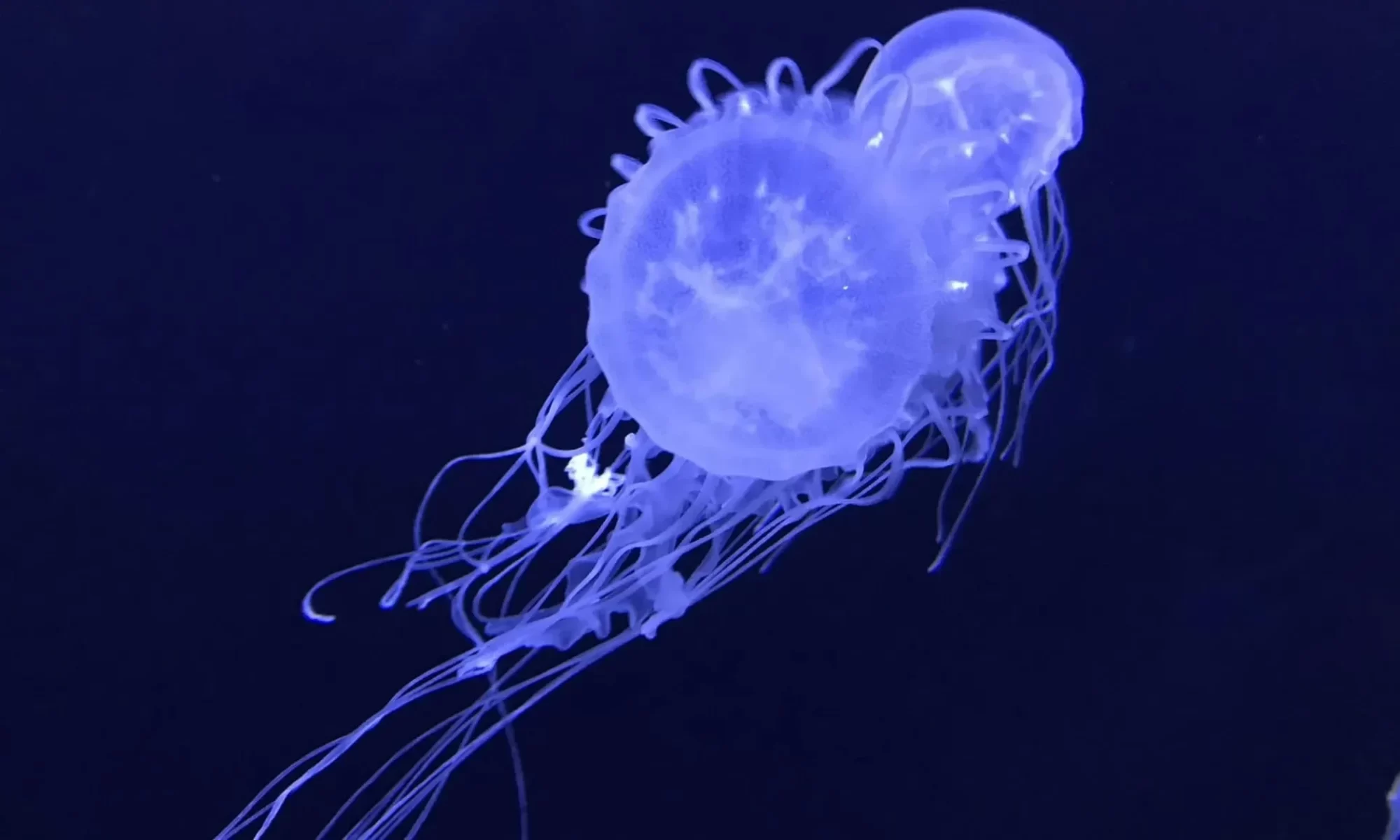
These jellyfish can sting without touching you, thanks to ‘mucus grenades’


Imagine encountering a creature that defends itself with unseen projectiles! National Geographic invites you on a journey into the remarkable world of upside-down jellyfish, showcasing Dr. Cheryl Ames’s extraordinary research into their unique defense strategy.
This captivating feature explores how these intriguing invertebrates, Cassiopea spp., can release ‘mucus grenades’ – microscopic, venom-filled structures that pack a potent sting without direct contact. Dr. Cheryl Ames, a marine biologist and associate professor at Tohoku University, provides a fascinating glimpse into the observation of these creatures’ efficiency:
“Then, within 24 hours, the pink cloud will be gone.” (referring to the cloud of zapped brine shrimp after feeding). This observation speaks volumes about the efficacy of their hidden defense system.
National Geographic beautifully illustrates how Dr. Ames’s profound contributions are reshaping our understanding of marine ecosystems and the intricate adaptations within them. It’s truly inspiring to see this deep dive into nature’s secrets featured by such a world-renowned publication, bringing the wonders of the ocean floor to life for millions worldwide.
Upside-down jellyfish release venom-filled ‘bombs’ in their snot


For years, swimmers have felt a perplexing tingling in waters inhabited by upside-down jellyfish, even without direct contact. Now, Live Science delivers the definitive scientific explanation, thanks to the pivotal research co-led by Dr. Cheryl Ames!
The long-standing question of what causes this ‘stinging water sensation’ has finally been addressed. As Dr. Cheryl Ames, an associate professor of applied marine biology at Tohoku University, explains the initial scientific challenge:
“We knew it had to be something in the mucus.”
Her team’s methodical investigation led to the identification of ‘cassiosomes’ – microscopic, venom-filled structures released by the jellyfish – providing the clear answer.
This compelling Live Science article details the journey of scientific inquiry, highlighting the rigorous process that unveiled nature’s hidden mechanisms. We’re proud to see Dr. Ames’s dedication to solving marine mysteries recognized by Live Science, bringing clarity and understanding to a broader audience.
Upside-down Jellyfish Create ‘Stinging Water’ That Kills Prey by Launching Mucus ‘Grenades’

[This study] began when I and other marine biologists were concerned about the source of ‘stinging water’—an irritating sensation that occurred while in the mangrove forest waters studying upside-down jellyfish, and working together with aquarists at major public aquariums,” Cheryl Ames, an author of the study from Tohoku University, Japan, and the Smithsonian’s National Museum of Natural History, told Newsweek.
“There were several theories exchanged by fellow marine biologists, and comments posted online by people after experiencing stinging water during snorkeling or swimming in those areas. We wanted to find out the scientific explanation behind the long-standing stinging water puzzle,” she said.
Cassiosomes are stinging-cell structures in the mucus of the upside-down jellyfish Cassiopea xamachana

Snorkelers in mangrove forest waters inhabited by the upside-down jellyfish Cassiopea xamachana report discomfort due to a sensation known as stinging water, the cause of which is unknown. Using a combination of histology, microscopy, microfluidics, videography, molecular biology, and mass spectrometry-based proteomics, we describe C. xamachana stinging-cell structures that we term cassiosomes. These structures are released within C. xamachana mucus and are capable of killing prey. Cassiosomes consist of an outer epithelial layer mainly composed of nematocytes surrounding a core filled by endosymbiotic dinoflagellates hosted within amoebocytes and presumptive mesoglea. Furthermore, we report cassiosome structures in four additional jellyfish species in the same taxonomic group as C. xamachana (Class Scyphozoa; Order Rhizostomeae), categorized as either motile (ciliated) or nonmotile types. This inaugural study provides a qualitative assessment of the stinging contents of C. xamachana mucus and implicates mucus containing cassiosomes and free intact nematocytes as the cause of stinging water. The discovery of cassiosomes is detailed in this paper
Click here to access the full article.
Click here to see the media impact of the discovery of cassiosomes
Upside-Down Jellyfish Release Weaponized Goo Packed With Toxic ‘Grenades’


Forget what you thought you knew about jellyfish! A recent mind-bending article on Gizmodo blasts open the bizarre secret of Cassiopea spp. – the upside-down jellyfish that can sting you without even a touch!
The mystery behind that infamous ‘stinging water’ has been cracked wide open, thanks to groundbreaking research co-led by Dr. Cheryl Ames. Her team discovered microscopic, venom-packed ‘cassiosomes’ that navigate on their own. As Dr. Ames vividly describes these tiny attackers:
“They were autonomous, moving around like little Roomba vacuums and bumping into the brine shrimp that we fed them, just killing them on contact, and moving on to the next.”
It’s truly wild to see Dr. Ames’s pioneering work not just uncovering new biological mechanisms but making such an incredible splash on Gizmodo, bringing truly cutting-edge, weird science to everyone!