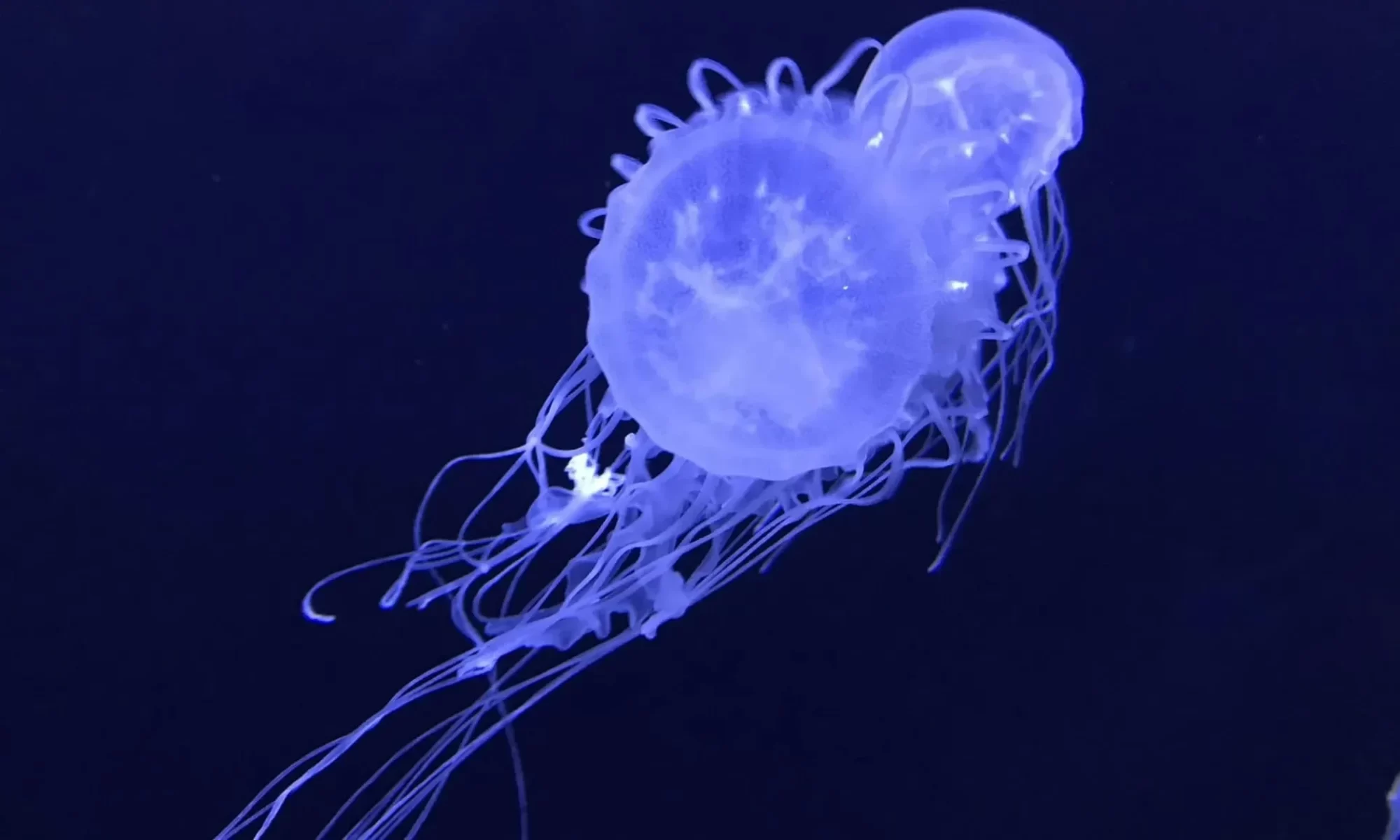

The article highlights the pioneering work of our own Dr. Cheryl Ames and her team in the Florida Keys. They led a crucial study demonstrating the potential of a portable Nanopore sequencer to detect the presence of upside-down jellyfish (Cassiopea xamachana) and other jellyfish species directly in the field! This represents an incredible leap forward, overcoming the challenges of bringing complex DNA analysis from labs into the marine environment.

This technology not only identified Cassiopea jellyfish but also revealed the presence of other species unseen at the time of sampling, such as moon jellyfish and venomous box jellyfish. The potential is vast: from predicting jellyfish sting risks to aiding fisheries management, supporting conservation efforts, and even integrating into autonomous underwater vehicles for comprehensive marine surveys.
This groundbreaking research stems from a foundational scientific paper published in Frontiers in Marine Science, underscoring its impact.
Read the full article on Smithsonian Ocean and dive into the future of species detection:
And for the original scientific paper that underpins this amazing work, access it here: