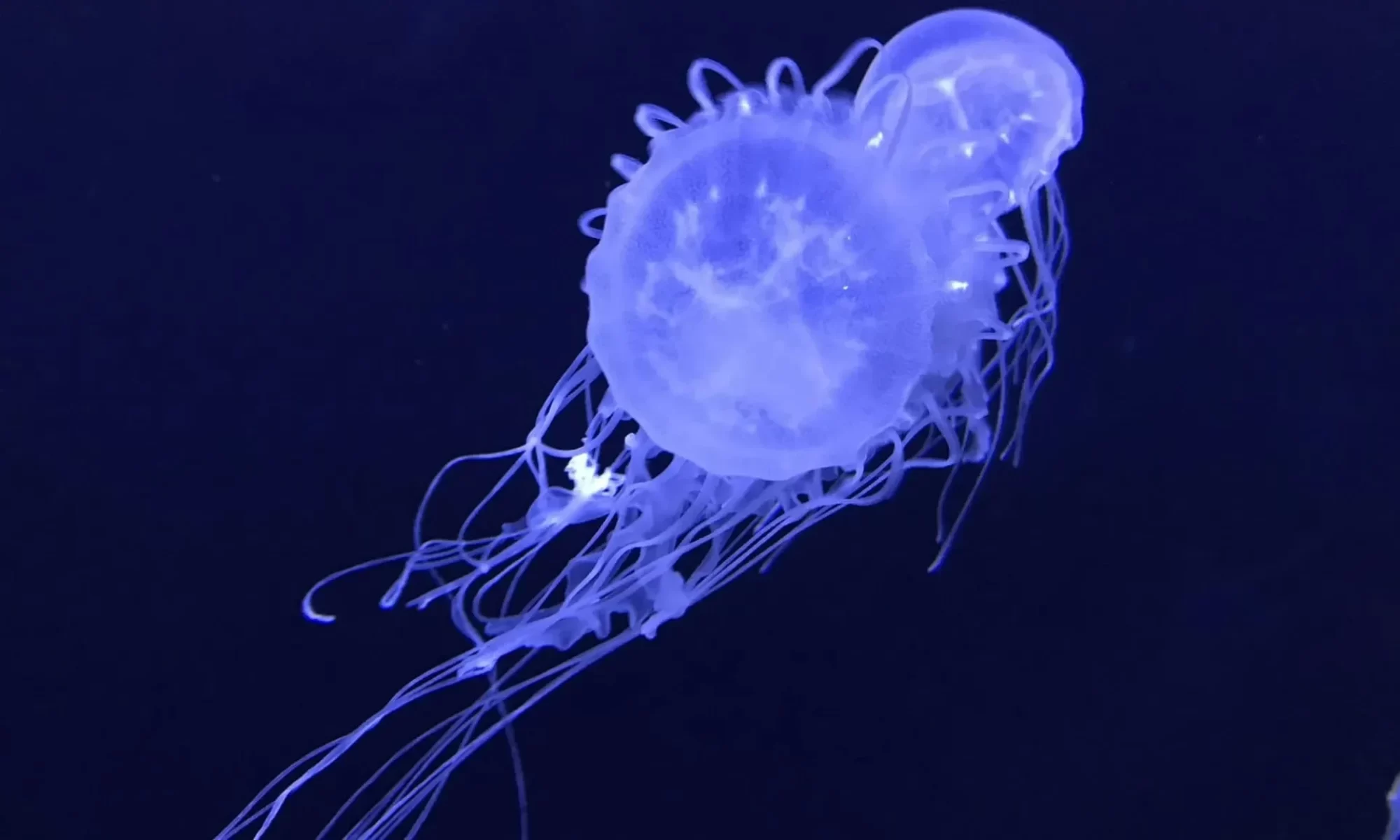
Upside-down Jellyfish Create ‘Stinging Water’ That Kills Prey by Launching Mucus ‘Grenades’

[This study] began when I and other marine biologists were concerned about the source of ‘stinging water’—an irritating sensation that occurred while in the mangrove forest waters studying upside-down jellyfish, and working together with aquarists at major public aquariums,” Cheryl Ames, an author of the study from Tohoku University, Japan, and the Smithsonian’s National Museum of Natural History, told Newsweek.

“There were several theories exchanged by fellow marine biologists, and comments posted online by people after experiencing stinging water during snorkeling or swimming in those areas. We wanted to find out the scientific explanation behind the long-standing stinging water puzzle,” she said.

Read the full story here

Upside-Down Jellyfish Release Weaponized Goo Packed With Toxic ‘Grenades’

Cassisomes as seen through a microscope. The oval structures are laced with toxic capsules known as nematocysts, and the brown blobs are symbiotic algae that live within the tissues of Cassiopea. Image: (Cheryl Ames and Anna Klompen)

Forget what you thought you knew about jellyfish! A recent mind-bending article on Gizmodo blasts open the bizarre secret of Cassiopea spp. – the upside-down jellyfish that can sting you without even a touch!

The mystery behind that infamous ‘stinging water’ has been cracked wide open, thanks to groundbreaking research co-led by Dr. Cheryl Ames. Her team discovered microscopic, venom-packed ‘cassiosomes’ that navigate on their own. As Dr. Ames vividly describes these tiny attackers:

“They were autonomous, moving around like little Roomba vacuums and bumping into the brine shrimp that we fed them, just killing them on contact, and moving on to the next.”

It’s truly wild to see Dr. Ames’s pioneering work not just uncovering new biological mechanisms but making such an incredible splash on Gizmodo, bringing truly cutting-edge, weird science to everyone!

Explore the News Story Here

Discover Dr. Ames’s Original Research Paper Here