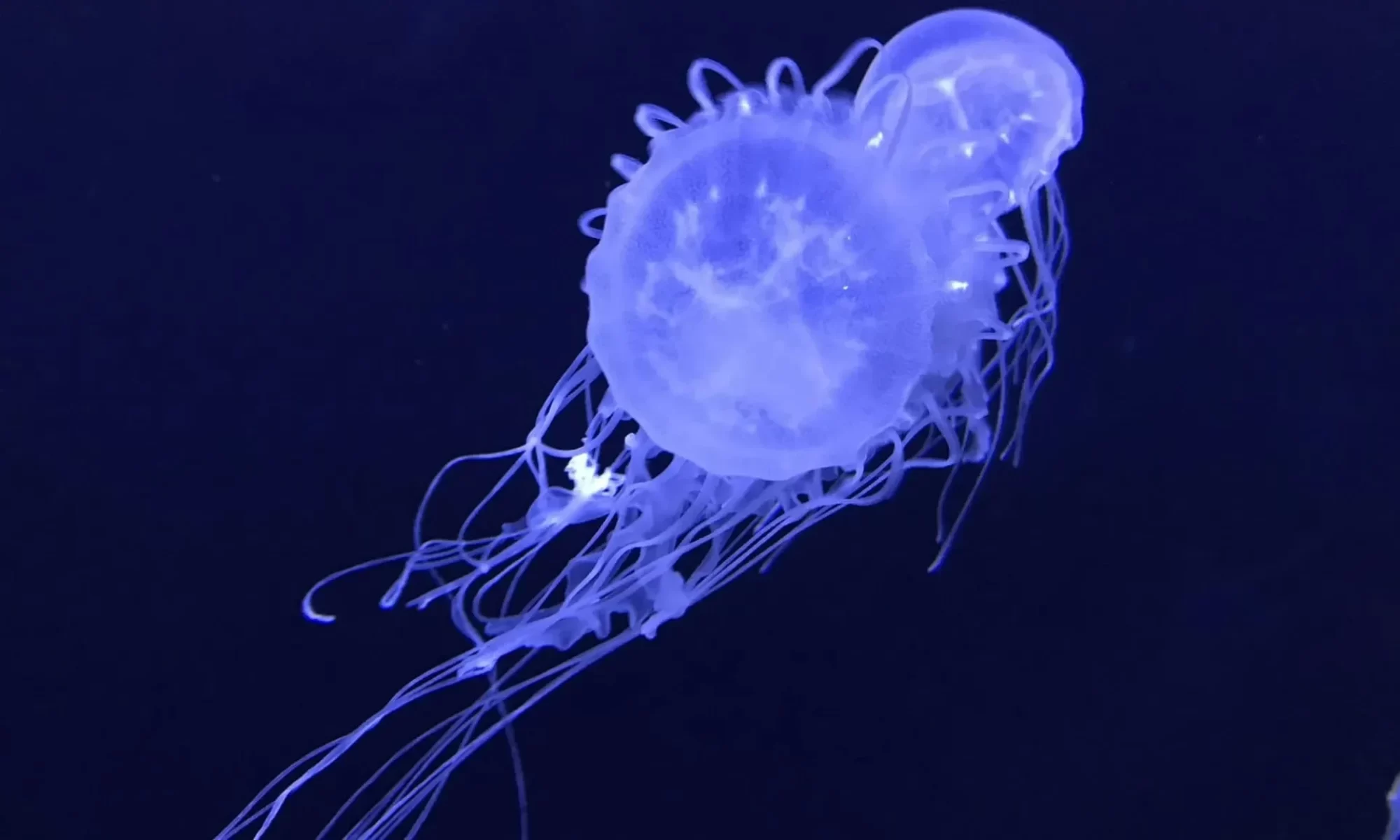
New Discoveries Rock the Tank: Enoshima Aquarium Faces a Classification Dilemma

Enoshima Aquarium

Discover the immediate dilemmas facing the Enoshima Aquarium—and what this means for their highly successful Portuguese Man-of-War exhibit.

Following the big splash made by the scientific discoveries originating from our lab, the established understanding of Physalia (the Portuguese Man-of-War) has been revolutionized. Research, which included the recent identification of Physalia mikazuki by our lab, now shows that what was once thought to be a single species first expanded to four and, with our lab’s subsequent discovery, grew to five distinct species in just over three months.

Opening what promises to be an amazing series in the Enoshima Aquarium Trainer’s Journal, Trainer Yamamoto presents a critical series of questions that highlight the practical impact of new taxonomy:

“Will we need to change the scientific names listed on our fish display boards and exhibits? Which species does the Japanese common name ‘Katsuo-no-Eboshi’ actually refer to? Since it is famous as a ‘highly venomous creature,’ are all five species equally dangerous?”

We are closely monitoring the developments at the Enoshima Aquarium and anxiously awaiting the answers to their questions.

It’s amazing to see the far-reaching impact of new and relevant scientific discoveries. You can find the full original post in the Enoshima Aquarium Trainer’s Journal here:

Enoshima Aquarium

Find our lab mentioned sicentific paper here:

Find the other relevant sientific paper here:

OIST x WPI-AIMEC (Tohoku U & JAMSTEC) Joint Workshop

OISTxAIMEC-Banner

Changing Marine Ecosystems: Biogeography of Habitat Shifts and Adaptation to Oceanographic Variability

Date

Thursday, November 20, 2025 – 09:00 to Friday, November 21, 2025 – 18:00

This event will be the fifth joint workshop between Tohoku University and OIST since 2021. This time, WPI-AIMEC (Tohoku U & JAMSTEC) is co-organizing the event. It will include presentations that provide an overview of the current status and challenges of research on the marine environment and marine ecosystems, to promote the exchange of knowledge among researchers from Tohoku University, JAMSTEC, OIST, as well as University of the Ryukyus, and the University of Hawai’i. A majority of presentations will be given by early career researchers, with ample time for discussion to consider future collaborations and joint funding applications.

Check for more information here:

This Gorgeous but Dangerous Jellyfish Was Just Discovered off Japan’s Coast

scitechdaily
Researchers in Japan Discover New Jellyfish Species Deserving of a Samurai Warrior Name

New, Venomous Portuguese Man-of-War Discovered in Japan’s North: Physalia mikazuki

This new species, named Physalia mikazuki (“crescent helmet man-o-war”) in honor of the samurai lord Date Masamune, marks the northernmost recorded presence of the Physalia genus to date, with specimens collected off the coast of northeastern Japan (Sendai Bay).

A student-led research team at Tohoku University (greatly formed by our lab) has formally identified a previously unknown species of the venomous siphonophore, Physalia —commonly known as the Portuguese man-of-war.

Key Scientific Findings:

  1. New Species Identification: Through detailed morphological examination and genetic analysis, the team confirmed that P. mikazuki is genetically distinct from its tropical relatives, specifically Physalia utriculus, which was previously believed to be the only species of the genus inhabiting Japanese waters.
  2. Climate-Driven Range Extension: The appearance of P. mikazuki in the colder waters of the Tohoku region suggests a significant shift in marine distribution. Ocean surface current simulations confirmed that the northward extension of the Kuroshio Current, combined with unusually high sea-surface temperatures, likely transported the colonies to Sendai Bay.
  3. Ecological Significance: The discovery provides direct evidence that climate-related changes in ocean circulation are actively reshaping the distribution of marine species, highlighting the urgency of coastal observation.

The research not only adds a new species to the world’s taxonomic records but also underscores the immediate impact of climate change on ocean ecosystems, influencing where even dangerous marine life can drift and thrive.

Find the original storye at SciTechDaily.com

Find the sicentific paper here:

New Jellyfish Discovery in Japan Is So Weird It Had to Be Named After a Samurai

In a rare marine encounter, researchers in Japan have uncovered a previously unidentified species of Portuguese man-of-war, Physalia mikazuki, off the coast of northeastern Japan. This marks the first time such a venomous jellyfish has been documented so far north in the country, with experts tying its arrival to warmer waters and changing currents.

access the complete story on the IDR(indian defence review) website

Find the original scientific paper here

New Portuguese Man O’ War Species Discovered After Warming Ocean Currents Push It North

A new species of Portuguese man o’ war has been discovered floating in the waters of northeast Japan. Spotted by a student-led research group, the discovery marks a species that has never been seen before in the area, raising questions about shifting distributions of marine creatures due to the effects of climate change.

The lab work is making a big impact in the media. We are proud to display the media coverage here and you can access the complete story on the IFLScience website.

Find the full paper here

Media Spotlight: New Samurai-Named Jellyfish Highlights Climate Change Threat

crescent helmet man-o-war

Our recent research paper, detailing the discovery of a new venomous jellyfish species in Japan, has captured international media attention, with outlets highlighting the fascinating cultural connection of its name and its critical implications for marine science.

The discovery, published in Frontiers in Marine Science, confirms the existence of Physalia mikazuki sp. nov.—a new type of Portuguese Man-of-War found unexpectedly far north in Japan’s Tohoku region.

A Name Worthy of a Warrior

The media coverage, including articles from Tohoku University, Asia Research News, and ScienceDaily, emphasized the unique story behind the new species’ name. The jellyfish was named P. mikazuki (“crescent helmet man-o-war”) as an homage to the legendary samurai warrior and feudal lord of Sendai, Date Masamune, who was famous for the crescent moon (mikazuki) adorning his helmet.

This culturally significant name drew attention to a serious scientific finding: the species’ arrival in the temperate Tohoku region is a direct result of marine ecosystem change.

Climate Change Drives Species North

The research, led by a team including Cheryl Lewis Ames, Chanikarn Yongstar, Kei Chloe Tan, and Ayane Totsu, suggests that warming coastal waters and the northward shift of the Kuroshio Current are pushing tropical species into previously untouched temperate zones. The study used DNA analysis and particle simulation modeling (as highlighted by the coverage) to confirm the species is distinct and to track its probable drift path from warmer waters.

This finding serves as a powerful indicator of how climate change is rapidly altering the global distribution of marine organisms, necessitating increased monitoring to ensure coastal safety and ecological understanding.

Access the original article on our site here:

Access the original selected media coverege here:


Physalia mikazuki sp. nov. (Phylum Cnidaria; class Hydrozoa) blown into Japan’s northeast (Tohoku) at the whim of marine ecosystem change

Researchers in Japan Discover New Jellyfish Species Deserving of a Samurai Warrior Name

A groundbreaking study co-authored by Cheryl Lewis Ames, Chanikarn Yongstar, Kei Chloe Tan, Ayane Totsu, and colleagues, has led to the identification of a new species of Portuguese Man-of-War (Physalia mikazuki sp. nov.) found in the waters of northeastern Japan (Tohoku).

The research, which also contou com Yoshiki Ochiai, Muhammad Izzat Nugraha, e Waka Sato-Okoshi, attributes the sudden presence of this new species in the temperate region to significant marine ecosystem changes. This discovery is vital for understanding how environmental shifts—such as changes in currents and climate—are forcing the global redistribution of marine organisms.

The findings emphasize the urgent need to monitor these shifts to protect marine biodiversity.

  • Authors: Chanikarn Yongstar, Yoshiki Ochiai, Muhammad Izzat Nugraha, Kei Chloe Tan, Ayane Totsu, Waka Sato-Okoshi, Cheryl Lewis Ames

Find the original scientific paper here:

Pathways to an integrated understanding of marine environments and ecosystems in the Asia-Pacific Region

Figure 1. Trends of (A) sea surface height from 1993 to 2022 and (B) sea surface temperature from 1982 to 2023. (C) Average scores of Ocean Health Index (OHI) components in the APR. The error bars indicate one standard deviation of the annual mean. (D) Trends of OHI components in the APR from 2012 to 2023. (E) Average scores of the biodiversity component of the OHI. (F) Trend of the biodiversity component from 2012 to 2023. The trends are calculated by using linear regression. The black box (93°E-120°W, 60°S-45°N) indicates the APR

The Asia-Pacific Region (APR) is a global hub of marine biodiversity, essential for global ecological stability and climate regulation. However, its ecosystems from extensive commercial fisheries to vital coral reefs face growing threats due to intense resource extraction and extreme climate events, such as marine heatwaves.

This Perspective article, led by an international collaboration (including Dr. Cheryl Ames), is the result of a seminar and workshop held at Tohoku University (Japan) in 2023. The goal was to address substantial barriers—including the vast diversity of cultures, languages, and management practices—that impede cross-national research efforts in the region.

The article concludes that these efforts are urgent and essential for supporting science-based policies and decisions, capable of confronting the escalating effects of climate change on the Pacific Asian marine systems.

“Without shared, high-quality data, our ability to detect patterns, predict outcomes, and guide effective action remains severely constrained.”

“A productive way forward is to build on regional initiatives that are already redefining how marine science is approached in the Asia-Pacific. This effort aligns with the goals of the World Premier International Research Centre Initiative-Advanced Institute for Marine Ecosystem Change (WPI-AIMEC), recently established at Tohoku University and Japan Agency for Marine-Earth Science and Technology (JAMSTEC), and a satellite campus at the University of Hawai’i, Manoa. WPI-AIMEC brings together researchers across disciplines to better understand and forecast marine ecosystem responses to environmental change, with a global scope but a particular focus on the Northwest Pacific.”

Find the Full Paper at Frontiers in Marine Science

Find more articles related to WPI-AIMEC

Welcome Aboard, Thomas and Kathleen!

We are absolutely thrilled to extend a warm welcome to our newest undergraduate students joining the IMS Lab for their research journey!

Our lab community is strengthened by the diverse perspectives and talents that students like Thomas and Kathleen bring. We look forward to supporting their work in marine biology and seeing the exciting contributions they will make to our research.

Please join us in giving them a fantastic welcome! You can find their full profiles and Social network links at the Meet The Lab page

The IMS Lab is front page whith Doctor Ames

Front page

Tohoku University released its new site design, with a lighter theme and clear lines. The new design is looking really good, but the biggest news for us is that our lab is featured on the front page.

Under the title, “The Romance of Research: Cheryl Ames,” there is an interview with Dr. Ames with text by Taylor Brin that showcases her motivation and ideals put into practice in the collaborative environment that is our lab.

“The Romance of Research: Cheryl Ames” is a really good read, and we are really proud of being portrayed on the new Tohoku University front page.

You can find the article here

And see the new Tohoku University front page here

For more Lab updates, click here