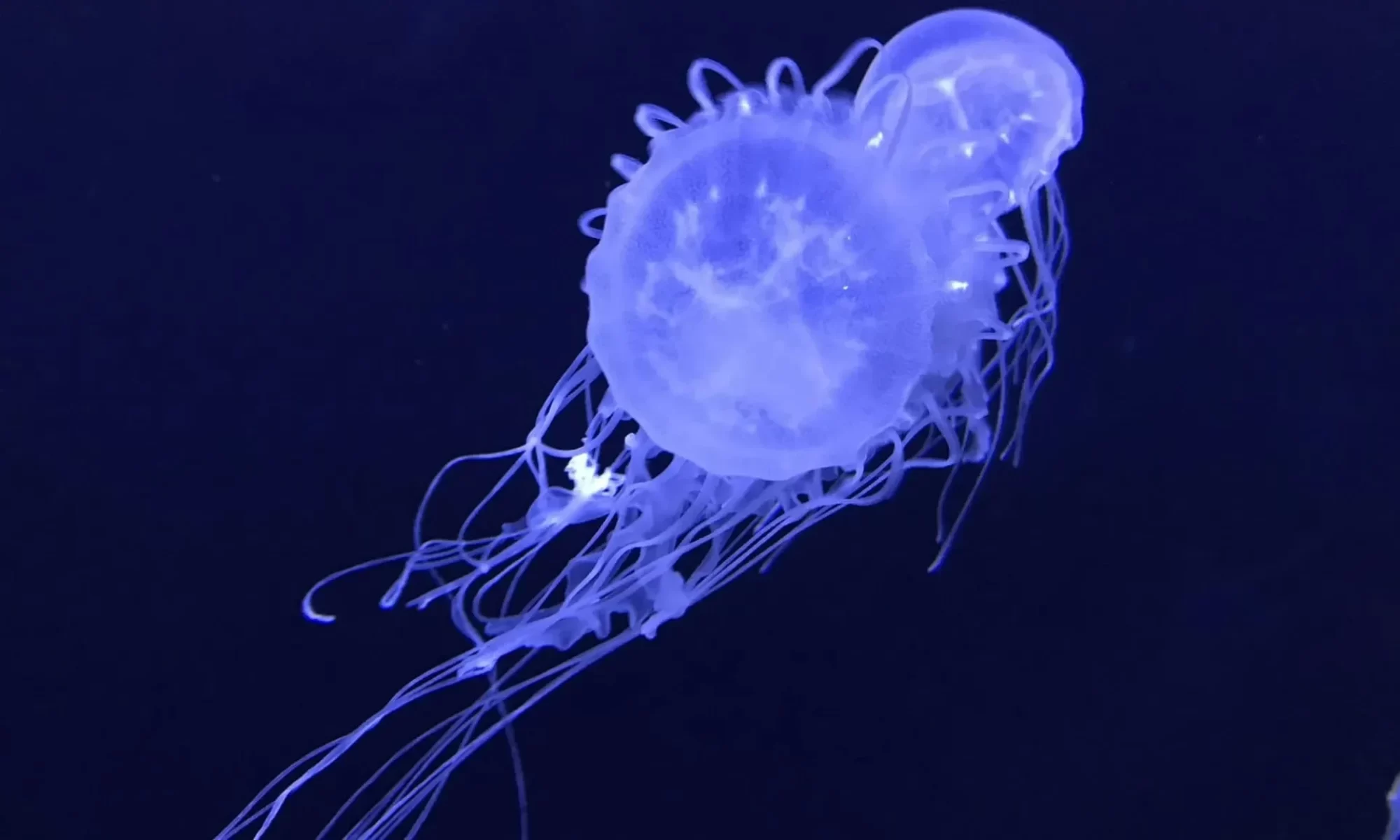

Led by Kei Chloe Tan , this study dives deep into the complex world of Rhizostomeae that play massive roles in Asian ecology and industry.
What makes these jellies unique?
Rhizostome jellyfishes are unlike your average medusa. They don’t have long, trailing tentacles neither other structures at the eadg of theyr bell; they have eight highly branched oral arms, along which there are suctorial minimouth orifices.
Our study focused on three main goals:
- Identity: Using DNA barcoding to accurately identify species in Japanese waters.
- Partnership: Mapping which types of algae live inside which jellyfish.
- The Sting: Identifying which species produce cassiosomes—the “mucus grenades” responsible for the mysterious “stinging water” syndrome.
Key Discoveries
- A New Neighbor: We discovered that Cassiopea (Upside-down jellyfish) found in Kagoshima likely represents a new, undescribed species.
- Symbiotic Flexibility: We found that these jellyfishes are “plastic” in their partnerships, meaning the same species of jellyfish can host different types of algae (Symbiodinium, Cladocopium, or Durusdinium) depending on the individual.
- The “Grenade” Evolution: We confirmed that cassiosome production is a unique trait of the suborder Kolpophorae. Interestingly, we found that young jellies might not produce them until they reach a certain developmental stage.
“This research provides a baseline for understanding how jellyfish and algae co-evolve, helping us manage coastal ecosystems and the jellyfish fisheries that are so vital to the region.” — Chloe Tan, Lead Author
Lab Work in Action
This paper wasn’t just about sequences; it combined advanced molecular techniques with classic microscopy.
- Tandem DNA Amplification: Chloe developed a new method to simultaneously sequence the DNA of both the jellyfish host and its tiny algal residents.
- Microscopy: We captured high-resolution images of the cassiosomes—clusters of stinging cells (nematocysts) with algae at their core—proving exactly how these “contactless stings” work.
Read the Full Paper
Interested in the molecular data or the high-resolution phylogenetic trees? You can find the full study here:
