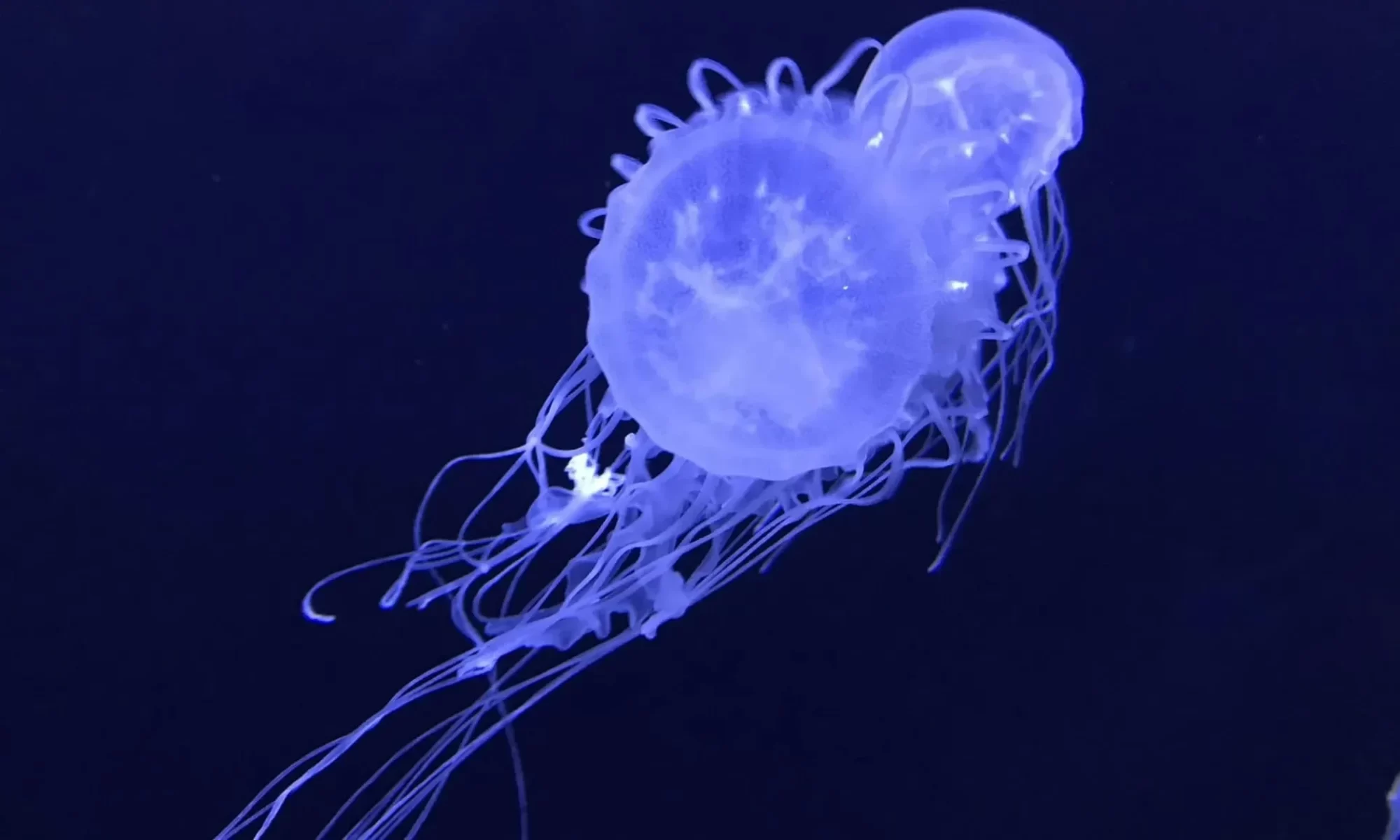

New Discovery: A New Species of Deadly Box Jellyfish Uncovered!
Iffah Iesa, Cheryl Lewis Ames, Nicholas Wei Liang Yap & Danwei Huang
Abstract. Two venomous box jellyfish species of the genus Chironex Southcott, 1956 (Cnidaria: Cubozoa: Chirodropida) were collected from Singapore’s coastal waters: Chironex indrasaksajiae Sucharitakul, 2017 and a novel species described herein as Chironex blakangmati, new species.
Chironex indrasaksajiae was collected from both the Johor and Singapore Straits around mainland Singapore. Chironex blakangmati, new species, was collected from Sentosa Island along the Singapore Strait and is the fourth species described in the genus. While C. blakangmati’s volcano-shaped pedalial canal and tentacle number are similar to C. yamaguchii Lewis & Bentlage, 2009, its elongated, sharp-tipped velarial canals and DNA sequences distinguish it from other Chironex species. Comparisons of Chironex blakangmati, new species, with C. yamaguchii and C. fleckeri
reveal novel morphological differences at the terminal end of the perradial lappet along the velarium edge, where C. blakangmati, new species, lacks velarial canals extending from the perradial lappet terminus. Juvenile Chironex yamaguchii specimens were examined and ontogenetic variations of velarial canals are herein reported. Preliminary cnidome analysis reveals eight types of nematocysts observed in C. blakangmati, new species, five types in C. indrasaksajiae, and five types in C. yamaguchii. Molecular phylogenetic reconstruction places C. blakangmati, new species, in a clade distinct from its congeners, as sister group to C. yamaguchii based on 16S rRNA gene analysis but diverging earlier than the clade comprising C. yamaguchii and C. indrasaksajiae based on cytochrome c oxidase subunit I gene analysis for which sequence data are comparatively limited. Understanding the biodiversity and seasonality of venomous cubomedusae will help mitigate the risk they pose to human health and safety during maritime activities.
Read the full article here: Raffles Bulletin of Zoology
2 Replies to “Chironex box jellyfishes (Cnidaria: Cubozoa: Chirodropida) in Singapore: Chironex blakangmati, new species, and range extension of C. indrasaksajiae”